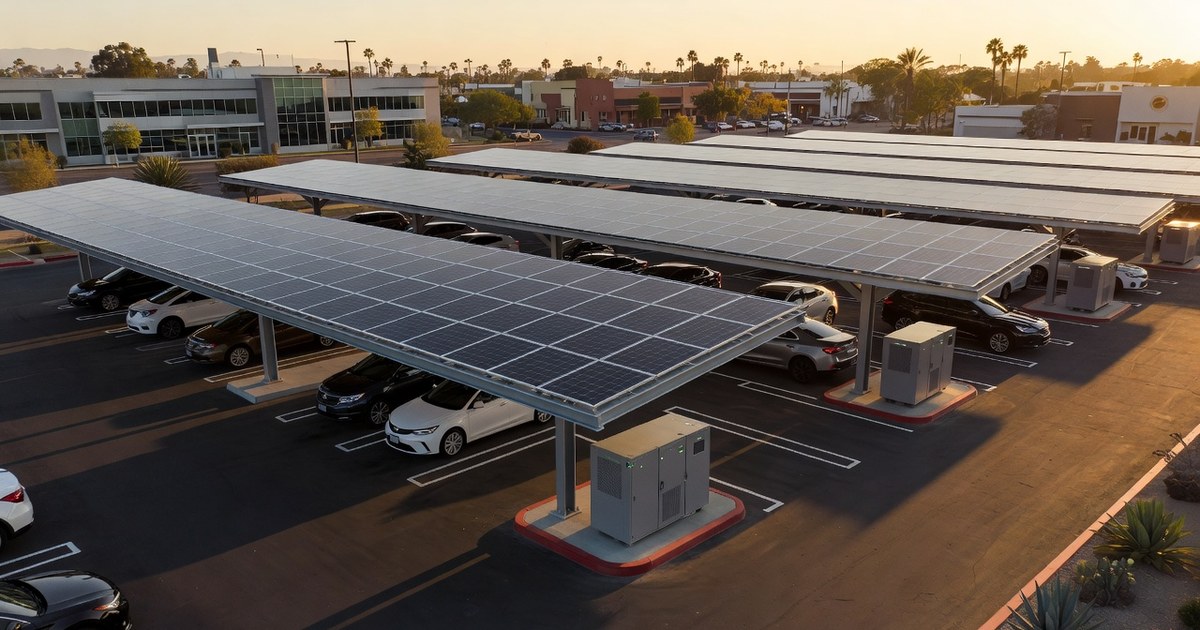
Commercial real estate owners and enterprise facility managers across California face mounting pressure from escalating utility tariffs, stringent decarbonization mandates, and growing tenant demands for sustainable infrastructure. Traditional rooftop solar installations often present structural limitations, roof warranty complications, and spatial constraints that limit generation capacity. As a result, commercial property developers are increasingly looking at underutilized surface parking lots as high-value clean energy generation hubs. By integrating canopy structures with on-site energy storage, properties can convert asphalt spaces into active revenue-generating assets.
Overcoming Rooftop Constraints with Parking Lot Solar
While rooftop photovoltaic arrays remain a standard deployment model, they frequently encounter engineering bottlenecks. Older commercial buildings may require significant structural reinforcement to support array weight and wind loads. Furthermore, ongoing roof maintenance, HVAC equipment footprints, and eventual membrane replacements can create complex operational disruptions. Solar canopies installed over surface parking lots eliminate these structural vulnerabilities entirely, leveraging independent ground-mounted steel frameworks designed for long-term durability and maximum solar exposure.
The Financial Mechanics of Solar Carports and Energy Storage
California commercial utility rates, governed largely by Time-of-Use (TOU) schedules and peak demand charges, can significantly inflate operating expenditures during high-demand afternoon and evening hours. Investing in professional commercial solar carport design allows property owners to optimize canopy orientation, steel cantilever spans, and photovoltaic module density. When paired with behind-the-meter battery energy storage systems (BESS), solar canopies capture low-cost clean energy during midday peak generation hours and discharge stored power when utility grid rates peak.
This strategic load-shifting mechanism slashes peak demand fees, which often account for up to half of a commercial property's monthly electricity bill. In addition, California property owners can leverage net billing frameworks, local utility capacity reservation programs, and federal Investment Tax Credits (ITC) with Modified Accelerated Cost Recovery System (MACRS) depreciation to accelerate capital recovery.
Monetization Through EV Charging Infrastructure
Modern parking canopies serve as the physical and electrical backbone for commercial electric vehicle (EV) charging stations. Integrating Level 2 and direct-current fast chargers (DCFC) directly beneath solar canopies provides shaded parking while utilizing self-generated solar power to charge vehicles. Facility operators can monetize this amenity through tiered customer pricing, subscription charging programs, or premium tenant parking packages. Offering shaded EV charging enhances property appraisal values and improves tenant retention across corporate campuses, healthcare facilities, and retail centers.
Resilience and Grid Independence via Microgrids
Grid instability, extreme weather events, and utility Public Safety Power Shutoffs (PSPS) present substantial operational risks for California enterprises. A solar carport array coupled with robust battery storage creates a resilient microgrid capability. During unexpected outages, the system automatically isolates from the regional grid and provides uninterrupted backup power to essential property operations, data servers, security systems, and emergency lighting. Maintaining business continuity during grid blackouts protects against costly downtime and safeguards sensitive tenant operations.
Key Engineering Considerations for Commercial Deployments
Executing a successful solar canopy installation requires precise planning and site assessment. Key factors include:
- Structural Foundation and Geotechnical Analysis: Soil conditions dictate concrete pier depth and anchor bolt configurations to handle seismic and wind load requirements.
- Clearance and Space Optimization: Canopies must accommodate delivery vehicles, emergency response equipment, and standard vehicle parking clearances without sacrificing parking stall count.
- Lighting and Security: Integrated LED lighting, conduit routing, and surveillance mounts improve nighttime safety and lower comprehensive installation costs.
- Interconnection and Permitting: Streamlined engineering drawings and early coordination with local utilities ensure timely interconnection approvals and compliance with California Building Code standards.
Long-Term Value Creation for Commercial Real Estate
Transforming open asphalt lots into multifunctional energy assets creates quantifiable environmental, operational, and financial returns. Commercial solar carports protect tenant vehicles from intense sun exposure, reduce ambient surface temperatures, and showcase visible corporate sustainability commitments. As California continues to advance aggressive clean energy targets, property owners who proactively capitalize on parking lot solar infrastructure will secure durable competitive advantages and long-term operating cost stability.